Data structures
Each card with its notes, and the video lesson that teaches it where there is one.
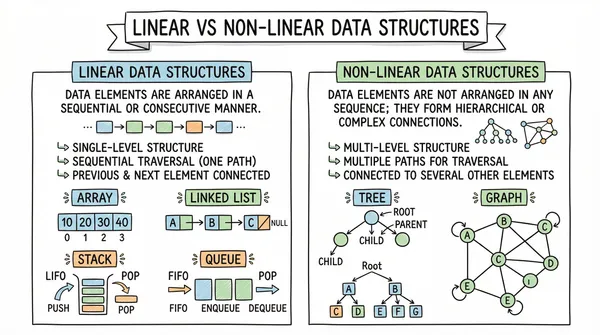 1. Linear vs non-linear
Compares linear data structures (elements in a sequence) with non-linear ones (elements in hierarchical or complex connections).
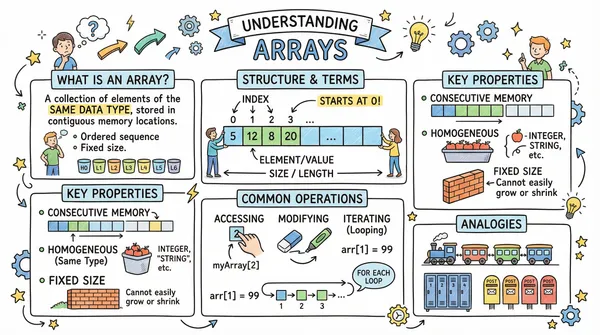 2. Arrays
Explains what an array is, its index-based structure, key properties and common operations.
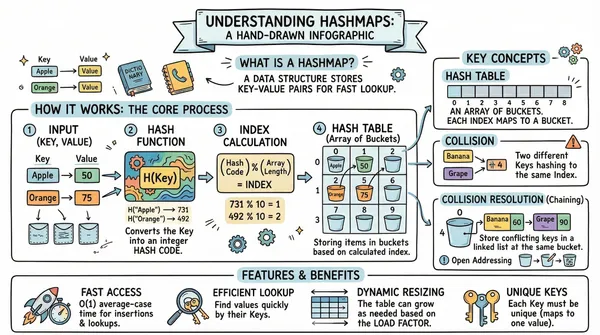 3. Hashmaps
Explains how a hashmap stores key-value pairs for fast lookup using a hash function and a table of buckets, including collisions.
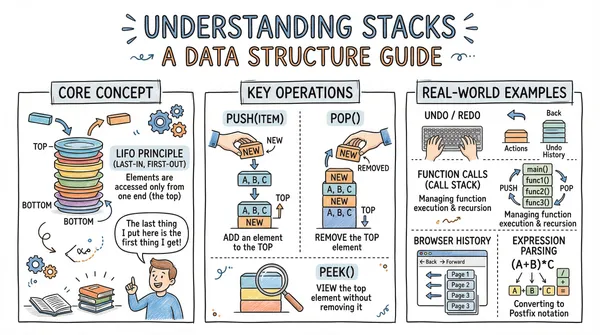 4. Stacks
Explains the stack data structure, its last-in first-out principle, its main operations and real-world uses.
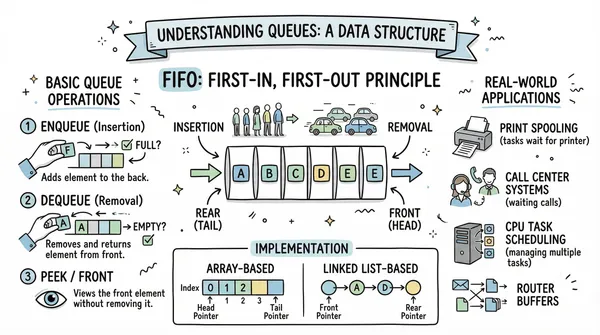 5. Queue
Explains the queue data structure, its first-in first-out principle, its basic operations, implementations and real-world uses.
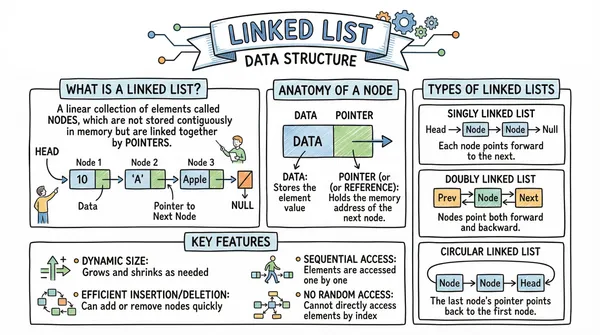 6. Linked list
Explains linked lists: nodes joined by pointers, the anatomy of a node, key features and the three common types.
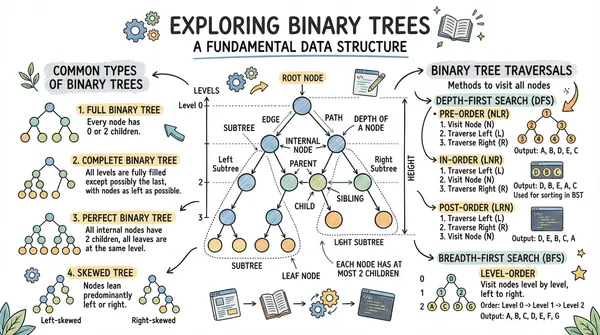 7. Binary tree
Covers binary tree terminology, the common tree types, and the depth-first and breadth-first traversals.
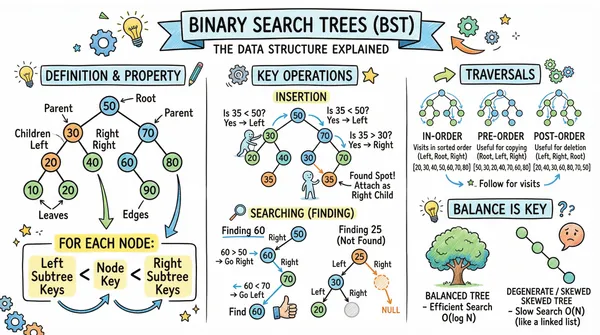 8. BST
Explains binary search trees: the ordering property, insertion and search, the three traversals, and why balance matters.
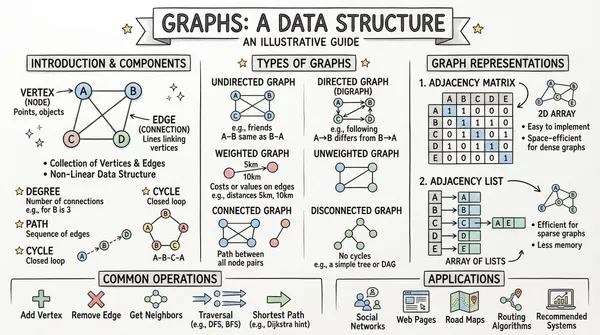 9. Graphs
Introduces graphs: components and terms, the main types, adjacency matrix and list representations, common operations and applications.
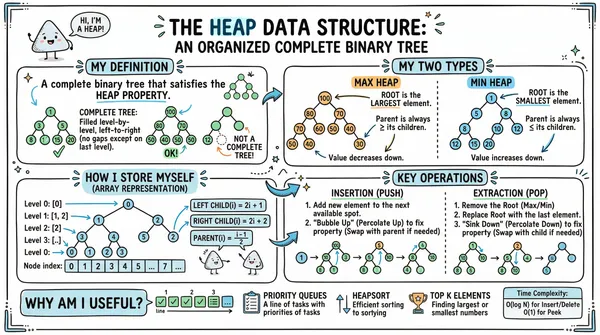 10. Heaps
Explains the heap, a complete binary tree that satisfies the heap property, with its two types, array storage, key operations and uses.
Make them stick
Sign in to see every card full size, tick the ones you've got, come back to the rest later, and keep your own notes on each card.