Availability and redundancy
The notes
Availability (uptime)
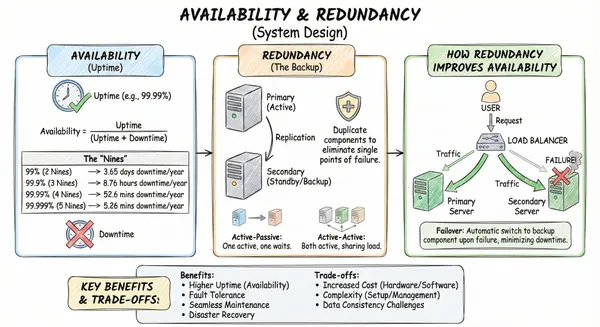
Availability is the percentage of time a system is operational and accessible to users, calculated as Uptime / (Uptime + Downtime). Higher availability means users can rely on the system being there when needed.
Downtime per year
- 99% (2 nines): 3.65 days per year
- 99.9% (3 nines): 8.76 hours per year
- 99.99% (4 nines): 52.6 minutes per year
- 99.999% (5 nines): 5.26 minutes per year
Why it matters
- Each additional nine requires exponentially more effort and cost
- Critical systems (banking, healthcare) aim for 99.99% or higher, while less critical systems may accept 99.9%
Redundancy (the backup)
Redundancy means having duplicate components (servers, databases, networks) so that if one fails, another takes over. It eliminates single points of failure: critical components whose failure would bring down the entire system.
Replication patterns
- Active-passive: the primary server handles all traffic while the secondary waits on standby; if the primary fails, the secondary activates
- Active-active: both servers handle traffic simultaneously, sharing the load; if one fails, the other continues serving all requests
What gets replicated
- Servers, databases, load balancers, network connections, power supplies, and even entire data centers across geographic regions
How redundancy improves availability
- A user's request goes through a load balancer that routes traffic to available servers
- If the primary server fails, the load balancer detects this through health checks and automatically redirects traffic to the secondary server
- This automatic failover happens in seconds, minimizing downtime; users experience no interruption because backup systems take over immediately
- Without redundancy, a server failure means complete downtime until manual intervention
- With redundancy, the system self-heals and maintains availability
Benefits and trade-offs
Benefits
- Higher uptime: the system stays operational despite component failures
- Fault tolerance: gracefully handles hardware and software failures
- Seamless maintenance: update components without downtime
- Disaster recovery: geographic redundancy protects against regional outages
Trade-offs
- Increased cost: duplicate hardware, software and infrastructure expenses
- Complexity: more components mean harder setup, monitoring and management
- Data consistency: keeping replicas synchronized requires careful coordination
System design deck
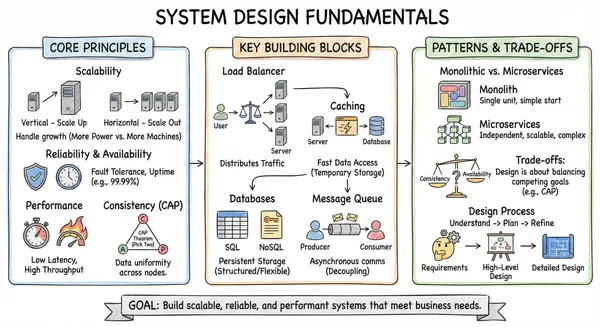 1. Fundamentals
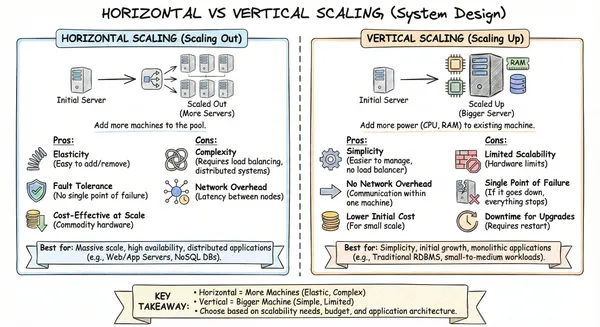 2. Scaling
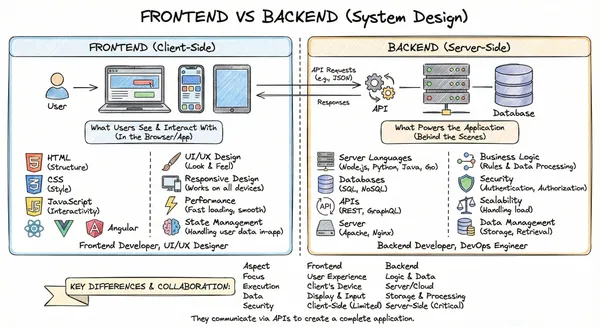 3. Frontend vs backend
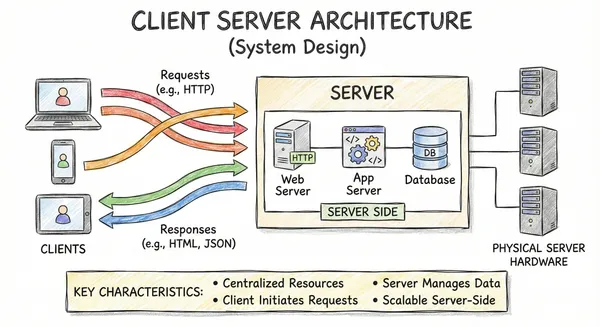 4. Client-server architecture
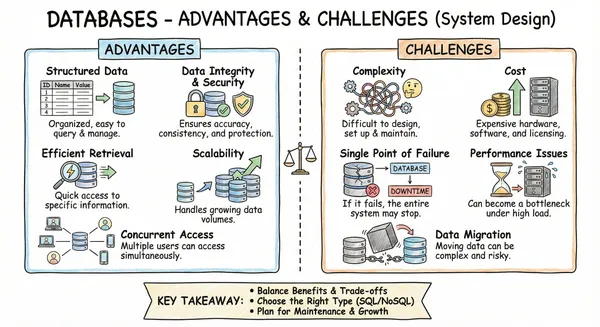 5. Databases
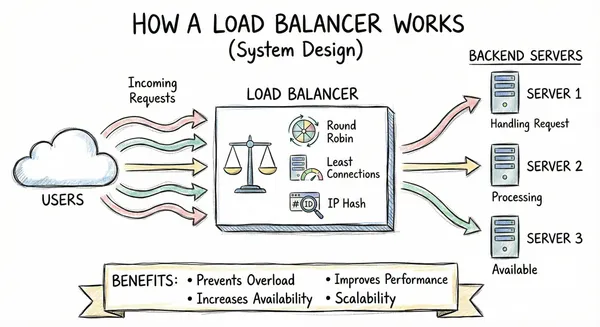 6. Load balancer
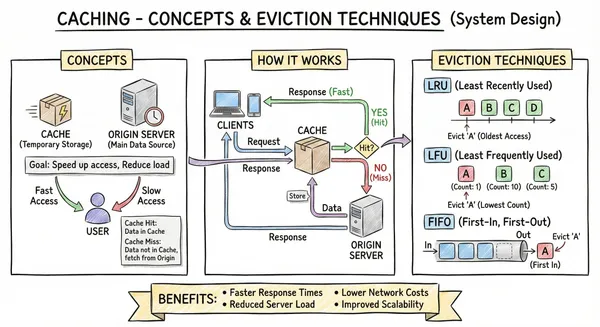 7. Caching
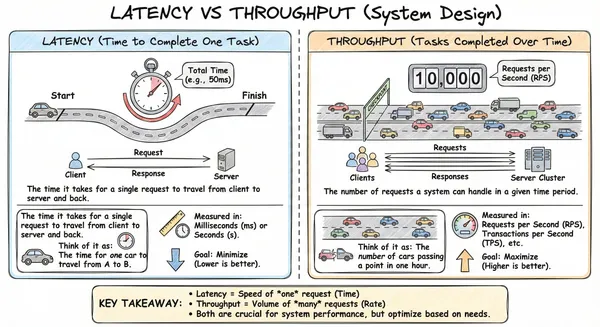 8. Latency vs throughput
 9. Availability and redundancy
 10. CAP theorem
and many more
Make them stick
Sign in to see every card full size, tick the ones you've got, come back to the rest later, and keep your own notes on each card.