Frontend vs backend
The notes
Frontend (client-side)
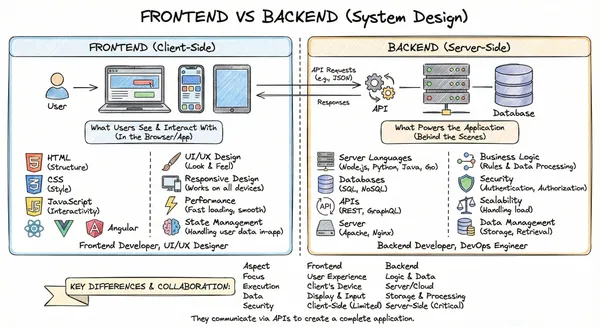
The presentation layer that runs in the user's browser or mobile app. Focuses on visual design, user interaction and client-side logic. Everything users directly interact with: clicking a button, filling a form or seeing an animation is frontend in action. It sends requests to the backend and displays the results in a user-friendly way.
Core technologies
- HTML: structure
- CSS: styling
- JavaScript: behavior
- React, Vue, Angular: frameworks
Key responsibilities
- UI/UX design: visual layout and user experience
- Responsive design: adapt to different screen sizes
- Performance: fast loading and smooth interactions
- State management: track user actions and data in-app
Roles
- Frontend developer
- UI/UX designer
Backend (server-side)
The application layer that runs on servers. Handles business logic, data processing, authentication and database operations that users don't see. It processes requests from the frontend, applies business rules, interacts with databases and returns data, ensuring data integrity, enforcing security and handling complex calculations that shouldn't happen on the client side.
Core technologies
- Node.js, Python, Java: languages
- PostgreSQL, MongoDB: databases
- REST, GraphQL: APIs
- Apache, Nginx: servers
Key responsibilities
- Business logic: core application rules and workflows
- Security: authentication, authorization, encryption
- Scalability: handle growing user load efficiently
- Data management: store, retrieve and process data
Roles
- Backend developer
- DevOps engineer
How they work together
They work together through APIs to create seamless user experiences.
Frontend vs backend
- Focus: user experience (frontend) vs logic and data (backend)
- Execution: client's device, browser or app (frontend) vs server or cloud (backend)
- Data handling: display and input collection (frontend) vs storage and processing (backend)
- Security: limited, client-side validation (frontend) vs critical, server-side verification (backend)
Communication
- Frontend sends API requests (HTTP/HTTPS)
- Backend processes the request and queries the database
- Backend returns JSON or other data
- Frontend displays the results to the user
System design deck
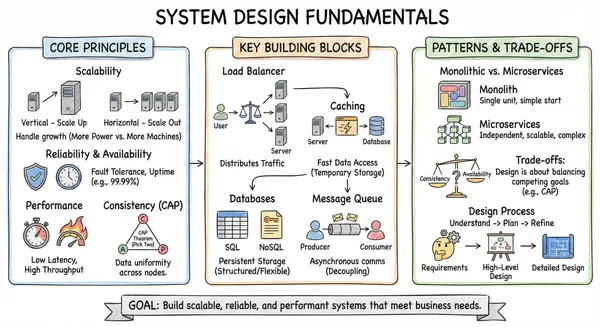 1. Fundamentals
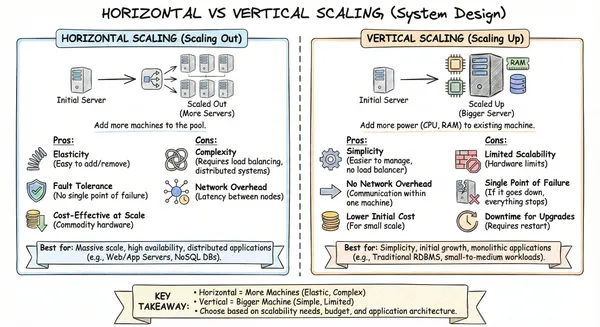 2. Scaling
 3. Frontend vs backend
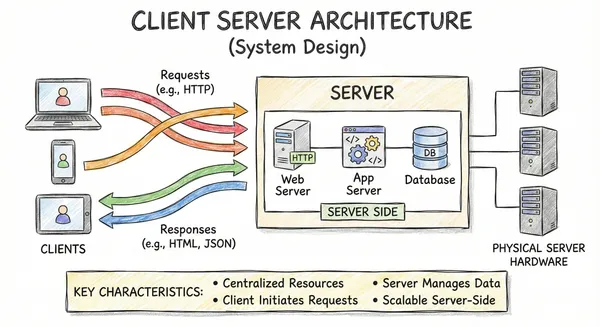 4. Client-server architecture
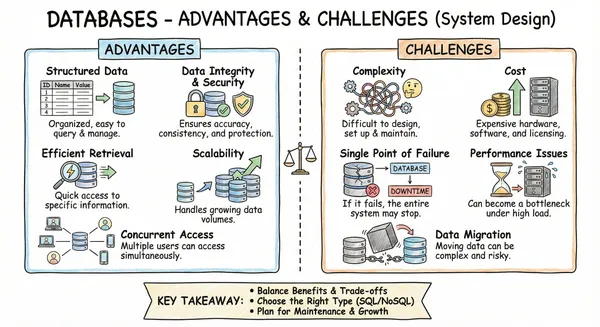 5. Databases
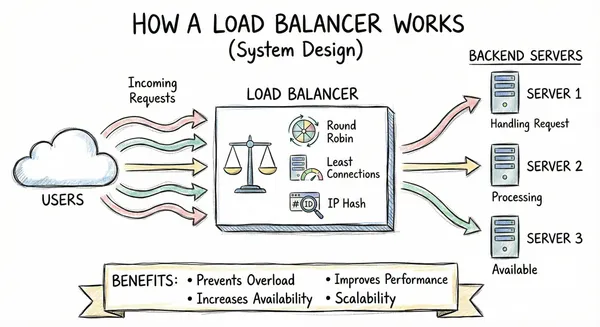 6. Load balancer
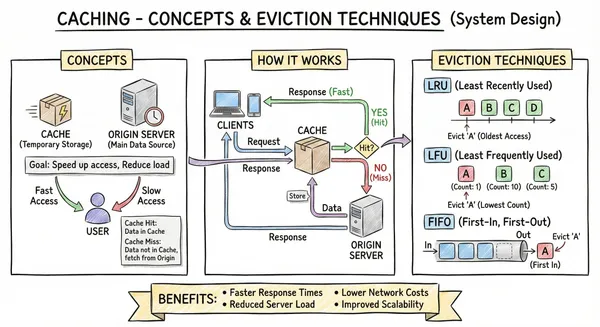 7. Caching
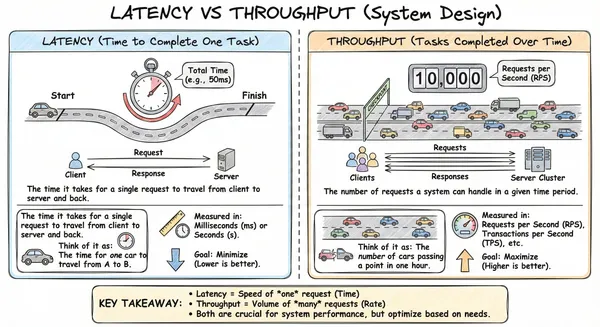 8. Latency vs throughput
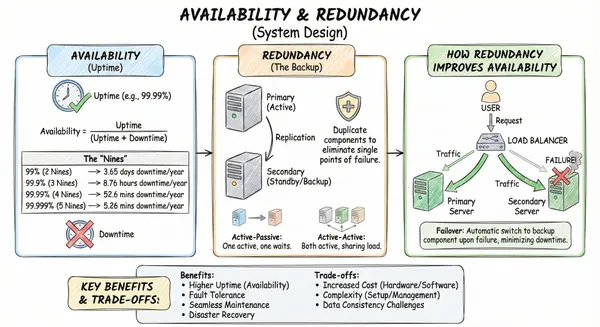 9. Availability and redundancy
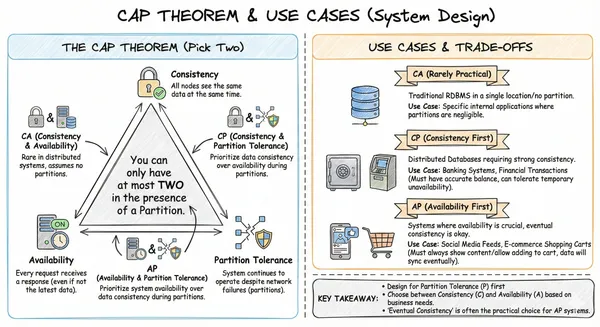 10. CAP theorem
and many more
Make them stick
Sign in to see every card full size, tick the ones you've got, come back to the rest later, and keep your own notes on each card.