Databases
The notes
Advantages
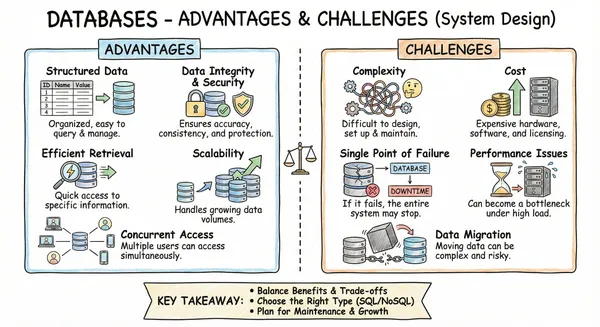
Databases are organized systems for storing, managing and retrieving data efficiently. They power everything from small apps to enterprise systems.
- Structured data: data organized in tables or documents with relationships; schema enforcement ensures consistency and makes querying intuitive
- Data integrity and security: built-in constraints ensure accuracy; access controls and encryption protect data from unauthorized access and loss
- Efficient retrieval: query languages and indexing enable quick access to specific information; complex queries filter and aggregate data in milliseconds
- Scalability: handles growing data volumes through vertical or horizontal scaling, from terabytes to petabytes
- Concurrent access: multiple users can read and write simultaneously; ACID properties ensure data consistency with concurrent operations
Challenges
- Complexity: designing optimal schemas requires expertise; setup and maintenance demand specialized knowledge and performance tuning skills
- Cost: requires expensive hardware, software licenses and skilled administrators; cloud databases add ongoing operational costs
- Single point of failure: database failure stops the entire application; requires redundancy, replication and backup strategies to minimize downtime
- Performance issues: can become a bottleneck under high load; requires monitoring, query optimization, indexing and sometimes caching layers
- Data migration: moving data between databases is complex and risky; downtime and data integrity concerns make migrations challenging
Key takeaway. Balance trade-offs: weigh benefits against complexity and cost based on your specific needs. Choose the right type: SQL for structured data with relationships, NoSQL for flexibility and scale. Plan for growth: design with scalability, backups and maintenance strategies from the start.
System design deck
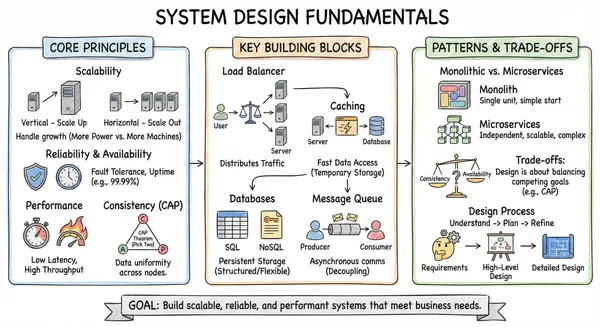 1. Fundamentals
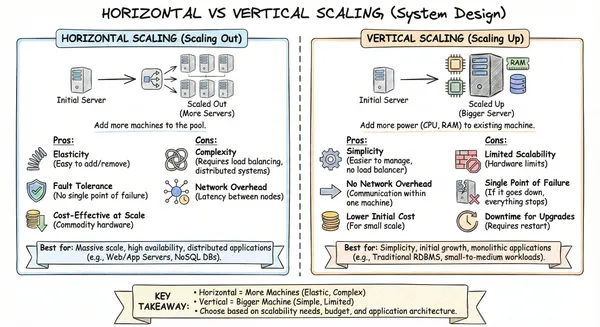 2. Scaling
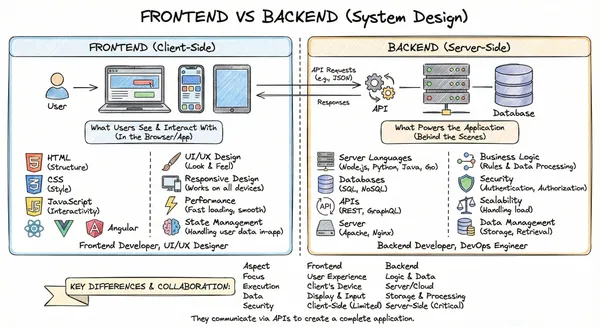 3. Frontend vs backend
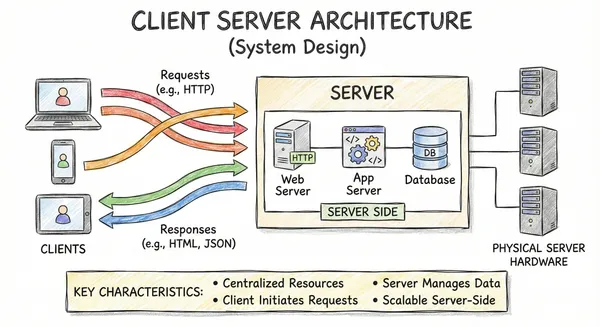 4. Client-server architecture
 5. Databases
 6. Load balancer
 7. Caching
 8. Latency vs throughput
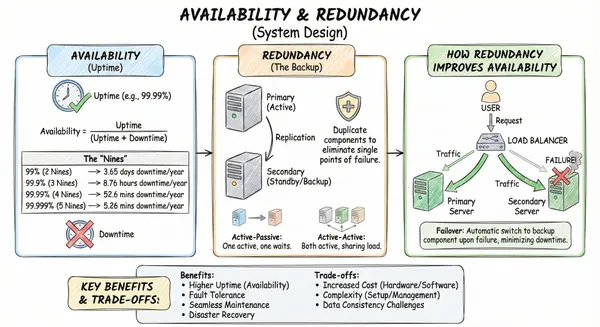 9. Availability and redundancy
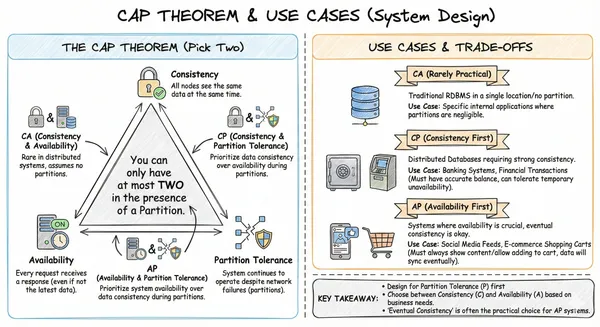 10. CAP theorem
and many more
Make them stick
Sign in to see every card full size, tick the ones you've got, come back to the rest later, and keep your own notes on each card.
Watch the lesson
 System design, Lesson 5, from 4:44: Advantages of Databases