Scaling
The notes
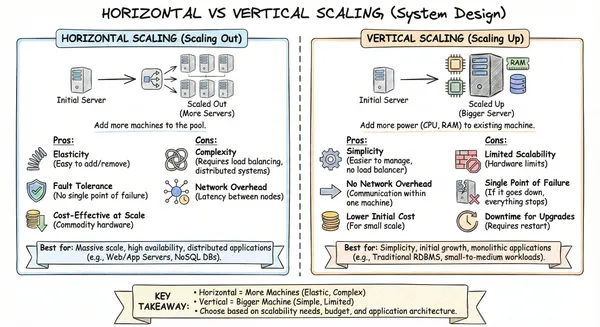
Horizontal scaling
Scaling out: add more machines to the pool and distribute the workload across multiple servers.
Pros
- Elasticity: easy to add or remove machines as needed
- Fault tolerance: no single point of failure; if one server fails, others continue
- Cost-effective at scale: use commodity hardware for massive scale
Cons
- Complexity: requires load balancing and distributed system management
- Network overhead: latency and communication costs between nodes
Best for
- Massive scale, high availability, distributed applications (e.g. web and app servers, NoSQL databases)
Vertical scaling
Scaling up: add more power (CPU, RAM, storage) to an existing machine, making the server bigger and more powerful.
Pros
- Simplicity: easier to manage, no load balancer needed
- No network overhead: all communication happens within one machine
- Lower initial cost: more economical for small-scale operations
Cons
- Limited scalability: hardware has physical limits and can't scale infinitely
- Single point of failure: if the server goes down, everything stops
- Downtime for upgrades: requires a system restart and potential service interruption
Best for
- Simplicity, initial growth, monolithic applications (e.g. traditional RDBMS, small-to-medium workloads)
Key takeaway. Horizontal: more machines; elastic, complex, distributed; ideal for cloud-native applications requiring high availability. Vertical: a bigger machine; simple, limited, centralized; best for traditional applications with predictable growth. Choose based on scalability requirements, budget constraints, application architecture and team expertise.
System design deck
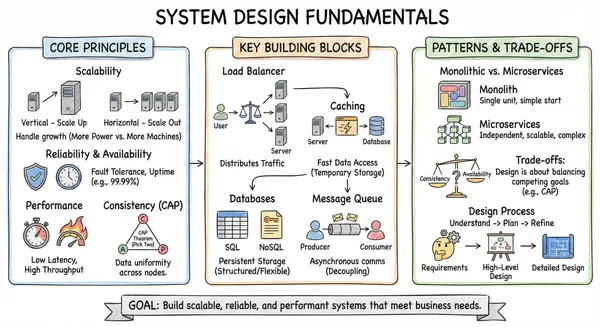 1. Fundamentals
 2. Scaling
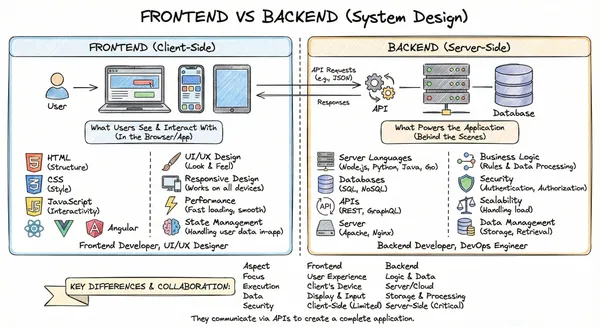 3. Frontend vs backend
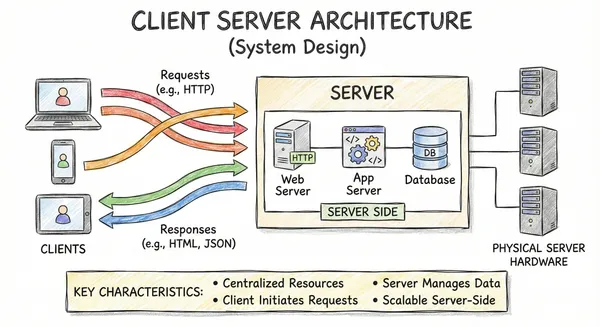 4. Client-server architecture
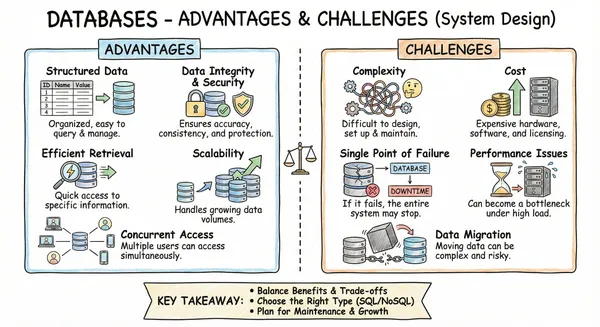 5. Databases
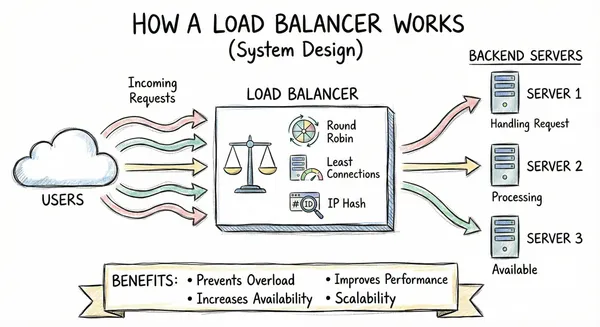 6. Load balancer
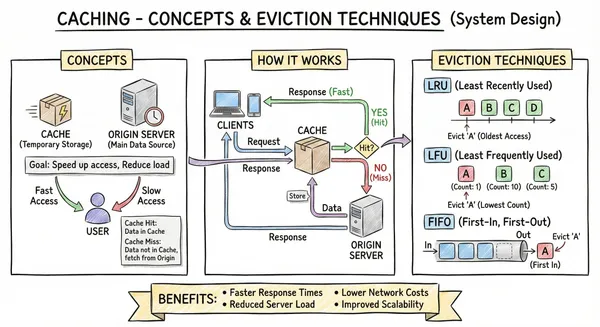 7. Caching
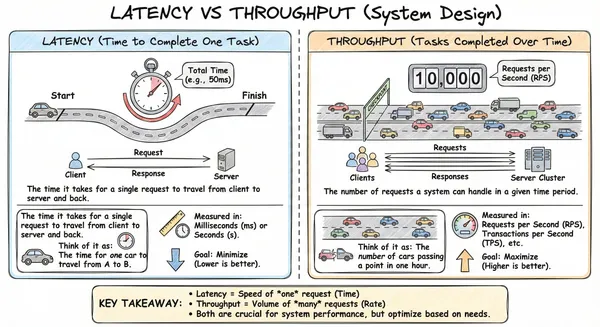 8. Latency vs throughput
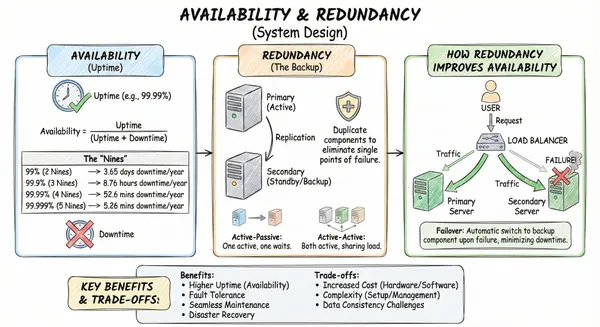 9. Availability and redundancy
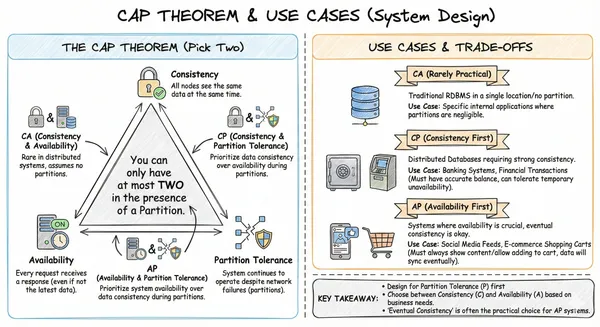 10. CAP theorem
and many more
Make them stick
Sign in to see every card full size, tick the ones you've got, come back to the rest later, and keep your own notes on each card.
Watch the lesson
 System design, Lesson 1, from 5:35: What is vertical and horizontal scaling?